A complete educational guide to the world of programming.
Programming is the process of creating instructions that tell computers how to perform tasks. These instructions are written in programming languages that humans can understand and computers can translate into machine operations. Programming powers websites, mobile applications, operating systems, artificial intelligence, robotics, cloud platforms, cybersecurity systems, scientific research, and entertainment technologies.
At its core, programming is problem solving. A programmer analyzes a problem, designs a solution, and writes code to implement that solution. Modern programming includes software engineering practices, testing, debugging, deployment, maintenance, and collaboration across large teams.
Today, billions of devices depend on software. From smartwatches and smartphones to satellites and autonomous vehicles, programming acts as the invisible engine that keeps the digital world running.
-------------------------------------------------------------------------------------------------------------------------------
---------> Learn
PythonThe history of programming stretches back to the nineteenth century. Ada Lovelace is often considered the first programmer because she created an algorithm for Charles Babbage's Analytical Engine. Although the machine was never fully built, her work established the foundations of software.
During the twentieth century, computers evolved rapidly. Early systems were programmed using machine code and punch cards. Languages such as FORTRAN, COBOL, and Lisp emerged during the 1950s, making software development more practical. The 1970s introduced C, a language that influenced many future technologies.
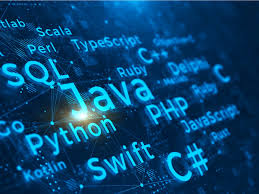
The 1980s and 1990s brought personal computers and the internet. Languages such as C++, Java, JavaScript, and Python became popular. As software grew in complexity, object oriented programming, databases, and networking technologies became essential skills.
In the twenty first century, cloud computing, mobile applications, artificial intelligence, and cybersecurity transformed the industry. Programming evolved from a niche profession into one of the most important skills in the global economy.
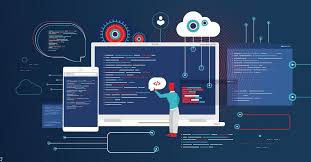
Modern programming is more diverse than ever before. Developers build applications for web browsers, smartphones, cloud platforms, embedded systems, and AI models. Open source software allows programmers worldwide to collaborate on shared projects.
Popular development areas include web development, mobile development, cybersecurity, machine learning, game development, blockchain, data science, cloud computing, and DevOps. Programming tools have also advanced significantly, offering automation, version control, continuous integration, and AI assisted coding.
Organizations rely on software to manage operations, analyze data, secure systems, and deliver services. As a result, programming skills remain in high demand across industries including healthcare, finance, education, manufacturing, and government.
The future of programming is expected to be shaped by artificial intelligence, automation, quantum computing, and advanced human computer interaction. AI tools can already assist developers by generating code, detecting bugs, and suggesting improvements.
Quantum computing may introduce entirely new programming paradigms. Edge computing and the Internet of Things will connect billions of devices. Cybersecurity will remain a critical concern as digital infrastructure expands.
Despite automation, programmers will continue to play a central role. Human creativity, architecture design, ethics, security, and problem solving remain difficult to automate fully. Future developers will likely work alongside intelligent systems rather than being replaced by them.
| # | Language | Main Uses |
|---|---|---|
| 1 | Python | AI, Data Science, Automation, Web |
| 2 | JavaScript | Web Development |
| 3 | Java | Enterprise Applications |
| 4 | C | Operating Systems |
| 5 | C++ | Game Engines |
| 6 | C# | Desktop Apps and Games |
| 7 | Go | Cloud Systems |
| 8 | Rust | Secure Systems |
| 9 | PHP | Web Backends |
| 10 | Swift | iOS Development |
| 11 | Kotlin | Android Development |
| 12 | TypeScript | Large Web Apps |
| 13 | Ruby | Web Applications |
| 14 | R | Statistics |
| 15 | MATLAB | Engineering |
| 16 | Scala | Big Data |
| 17 | Dart | Flutter Apps |
| 18 | Perl | Scripting |
| 19 | Lua | Game Scripting |
| 20 | Julia | Scientific Computing |
| 21 | COBOL | Banking Systems |
| 22 | Fortran | Scientific Research |
| 23 | Lisp | AI Research |
| 24 | Prolog | Logic Programming |
| 25 | Haskell | Functional Programming |
| 26 | Elixir | Scalable Systems |
| 27 | Erlang | Telecommunications |
| 28 | Groovy | JVM Scripting |
| 29 | Objective-C | Legacy Apple Apps |
| 30 | Assembly | Low Level Programming |
| 31 | F# | Functional .NET |
| 32 | Ada | Defense Systems |
| 33 | Bash | Linux Automation |
| 34 | PowerShell | Windows Automation |
| 35 | Delphi | Desktop Apps |
| 36 | Visual Basic | Business Software |
| 37 | LabVIEW | Instrumentation |
| 38 | Solidity | Smart Contracts |
| 39 | VHDL | Hardware Design |
| 40 | Verilog | Chip Design |
| 41 | Scratch | Education |
| 42 | Blockly | Learning Programming |
| 43 | Smalltalk | OOP Research |
| 44 | OCaml | Compilers |
| 45 | Crystal | Web Services |
| 46 | Nim | System Programming |
| 47 | Zig | Low Level Systems |
| 48 | Awk | Text Processing |
| 49 | Sed | Text Editing |
| 50 | Tcl | Automation |
| 51 | Scheme | Academic Research |
| 52 | APL | Mathematics |
| 53 | Ballerina | Integration |
| 54 | Hack | Web Systems |
| 55 | Pony | Concurrent Systems |
| 56 | Elm | Frontend Apps |
| 57 | ReasonML | Web Development |
| 58 | CoffeeScript | JavaScript Alternative |
| 59 | ActionScript | Legacy Flash |
| 60 | Q# | Quantum Computing |
| 61 | Racket | Education |
| 62 | SAS | Analytics |
| 63 | SPSS Syntax | Statistics |
| 64 | PL/SQL | Oracle Databases |
| 65 | T-SQL | SQL Server |
| 66 | ABAP | SAP Systems |
| 67 | CLIPS | Expert Systems |
| 68 | FoxPro | Databases |
| 69 | Logo | Education |
| 70 | Pascal | Teaching |
| 71 | Modula-2 | Systems |
| 72 | PureScript | Functional Web |
| 73 | Red | Cross Platform |
| 74 | Rebol | Scripting |
| 75 | Io | Prototype Programming |
| 76 | Mercury | Logic Programming |
| 77 | Eiffel | Software Engineering |
| 78 | Xojo | Desktop Apps |
| 79 | Ring | General Purpose |
| 80 | Genie | GNOME Development |
| 81 | Seed7 | General Purpose |
| 82 | Harbour | Business Apps |
| 83 | Monkey C | Garmin Apps |
| 84 | OpenCL C | Parallel Computing |
| 85 | Chapel | Supercomputers |
| 86 | Alice | Education |
| 87 | Inform | Interactive Fiction |
| 88 | GDScript | Godot Games |
| 89 | Wolfram | Mathematics |
| 90 | PostScript | Printing |
| 91 | ML | Academic Use |
| 92 | BASIC | Education |
| 93 | bc | Calculations |
| 94 | Janus | Research |
| 95 | Pike | Network Programming |
| 96 | Unicon | General Purpose |
| 97 | MaxScript | 3D Modeling |
| 98 | AutoLISP | CAD Automation |
Programming has evolved from punch cards and machine code into a powerful discipline that drives modern civilization. Whether creating websites, defending networks, training AI systems, or exploring space, programmers transform ideas into reality through software. Understanding the history, present state, and future direction of programming provides valuable insight into one of humanity's most influential technologies.